The county line, the January filing, the builder contract and the state law that decides what happens when something goes wrong.
By Gentry Todd, Gentry Todd Group at Compass
Last Updated: November 19, 2026
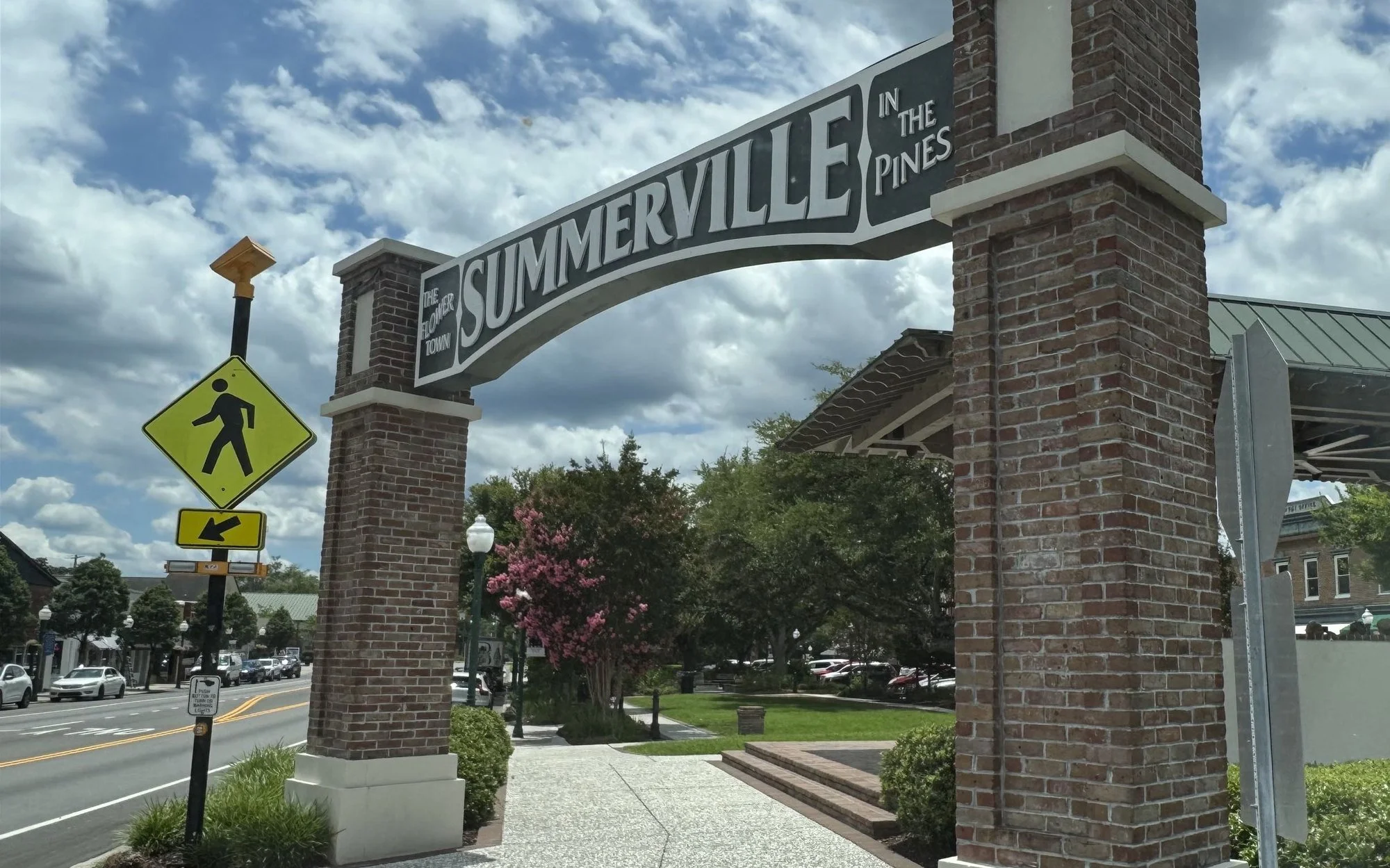
The Summerville town entrance arch. Photo: Thunder60447, CC BY 4.0, via Wikimedia Commons.
Most of what decides whether new construction homes in Summerville work out has nothing to do with the floor plan. It comes down to four things: which county the lot actually sits in, whether you file for the 4 percent legal residence ratio by January 15, what the builder contract gives up compared with a resale contract and the South Carolina statute that governs what happens when something is wrong after closing. Get those right and the rest is finish selections.
This guide is for buyers comparing Nexton, Cane Bay Plantation, Summers Corner and the smaller infill subdivisions, and for townhome buyers weighing the HOA math against a detached house. It covers the parts a model-home visit will not, including when resale is the better answer.
Quick Facts
Most Summerville addresses fall in Dorchester or Berkeley County. Single-family homes sold for a median of $399,997 in Dorchester County and $422,894 in Berkeley County from January through September 2026.
Nexton and Cane Bay carry Summerville mailing addresses but sit in Berkeley County and feed Berkeley County schools, not the Dorchester District Two schools serving the historic town.
A new home bills at the 6 percent assessment ratio until you file for legal residence. The application is due January 15 of the year after you close.
South Carolina's property condition disclosure law does not apply to the first sale of a dwelling never inhabited, so a new build comes with less seller disclosure than a resale.
Before you sue a builder over a defect, South Carolina law requires written notice at least 90 days before filing, and repairing the defect yourself first can put the claim at risk.
In This Guide
What New Construction Homes in Summerville Cost Right Now
The County Line That Changes Your Tax Bill and Your Schools
The January Filing That Costs a Year of Savings
What the Builder Contract Does Not Give You
Warranty Coverage and the Law Behind It
The Three Inspections Worth Paying For
Summerville Townhomes and the HOA Math
Register Your Agent on the First Visit
When Resale Is the Better Answer
Frequently Asked Questions
What New Construction Homes in Summerville Cost Right Now
Summerville sits on a county line, so the market numbers come in two parts. In Dorchester County, single-family homes sold for a median of $399,997 from January through September 2026, up 0.9 percent from the same months of 2025, across 2,215 sales. Homes took an average of 47 days to sell, up from 41, and sellers received 96.4 percent of their original list price. In Berkeley County, which takes in Nexton and Cane Bay, the median was $422,894 across 3,595 sales, with 48 days on market and 97.1 percent of original list price received. The Berkeley figure also covers Goose Creek, Moncks Corner and Daniel Island, so treat it as a county-wide number.
Inventory is building. Dorchester County had 900 single-family homes for sale in September, 14 percent more than a year earlier, and Berkeley County had 1,176. More choice gives buyers room to negotiate, and in new construction most of that room sits in the incentive rather than the price.
New construction clusters close to those medians, because so much of the inventory comes from repeated builder floor plans. Townhomes generally start in the low $300,000s. Entry-level detached homes run from the high $200,000s to the low $400,000s depending on community and lot premium. Larger plans in Nexton and the newer Cane Bay phases reach into the $500,000s and $600,000s, and the top of the market clears $900,000.
The number that matters more than list price is the incentive. Builders in this market are offering rate buydowns, closing cost credits tied to their affiliated lender and flex cash on standing inventory. A $15,000 incentive on a $400,000 home is a bigger swing than any price negotiation you are likely to get. The Gentry Todd Group tracks what each community is offering month to month, because the incentives move faster than the list prices do.
The County Line That Changes Your Tax Bill and Your Schools
This is the most expensive thing buyers miss. A Summerville mailing address does not mean Dorchester County, and it does not mean Dorchester District Two schools.
Where the big communities actually sit
Nexton and Cane Bay Plantation carry Summerville addresses but sit in Berkeley County, inside the Berkeley County School District. Nexton Elementary is a Berkeley County school, and the area's high school is Cane Bay High School, which opened in 2008 and has grown with the surrounding development. The historic town of Summerville and Summers Corner sit in Dorchester County and feed Dorchester District Two, a district of roughly 26,000 students. Same ZIP code in some cases, two different county tax structures and two different school assignments.
What that means for your offer
Millage is set separately by each county, municipality and school district, so two otherwise identical homes a few miles apart can carry noticeably different annual bills. Before you sign, get the parcel's tax map number from the builder and run it through that county's own estimator rather than relying on the tax figure in the listing, which is often the land-only bill from before the house existed. Confirm the school assignment with the district rather than with the sales office, because attendance lines in fast-growing areas shift as new schools open.
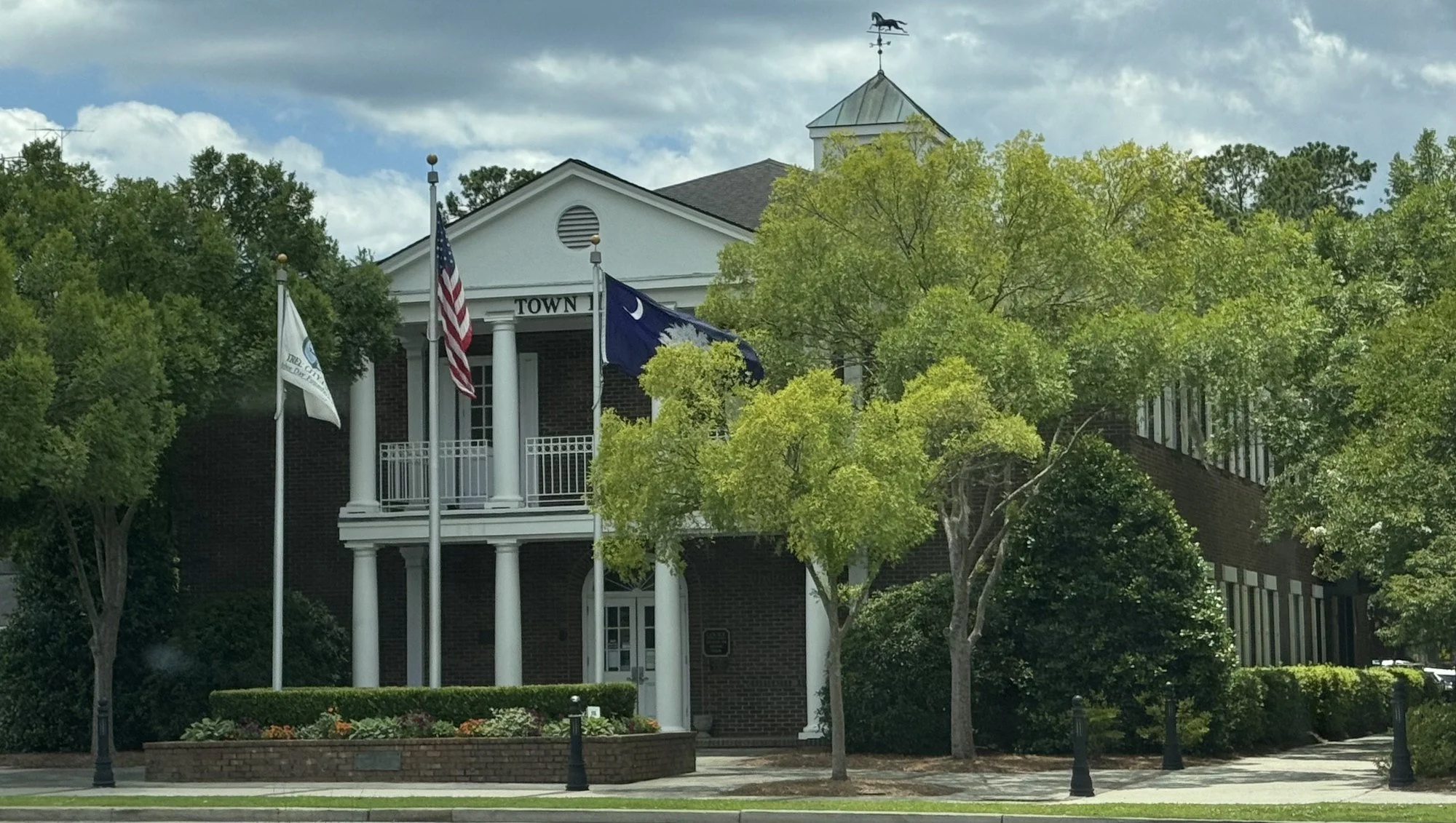
Summerville Town Hall in the historic town, which sits in Dorchester County. Photo: Thunder60447, CC BY 4.0, via Wikimedia Commons.
The January Filing That Costs a Year of Savings
South Carolina taxes an owner-occupied legal residence at a 4 percent assessment ratio and second homes and rentals at 6 percent, and the lower ratio also exempts the home from school operating millage. That exemption is usually worth more than the ratio itself.
The catch is that nothing is automatic. A newly built home bills at 6 percent until you apply to the county assessor, and the application has to be filed by the first penalty date, which in Berkeley County is January 15. Miss it and you can end up paying the higher rate for that year. Closings in the back half of the year are where this goes wrong most often, because the buyer is still unpacking in December. Put the filing on your calendar the week you close, not the week the tax bill arrives.
What the Builder Contract Does Not Give You
A builder contract is not the standard South Carolina purchase agreement with the builder's name typed in. It is the builder's own document, written by the builder's attorneys, and several of the protections a resale buyer takes for granted are missing.
The disclosure that does not exist
South Carolina's Residential Property Condition Disclosure Act exempts the first sale of a dwelling never inhabited. Buying new construction in Summerville means no seller disclosure statement about the roof, the systems, the drainage or the history of the lot. You are relying on your own inspections and on whatever the builder puts in writing.
Earnest money, lenders and the fine print
Earnest money on a to-be-built home is often larger than on a resale and is often non-refundable after a short window, with design center selections treated as non-refundable from the day you make them. You are not required to use the builder's affiliated lender, though the closing cost incentive usually depends on it, so price the incentive against a competing quote rather than assuming it wins. Read the completion-date language too. Most builder contracts give a target rather than a firm date and limit your remedy for delay to cancellation, which is worth knowing before you give notice on a lease.
Arbitration
Most national builder contracts in this market require binding arbitration for disputes and waive the right to join a class action. That clause is rarely negotiable, but read it before you sign rather than after a dispute, because it decides where any defect claim gets heard.
Warranty Coverage and the Law Behind It
There is no state-mandated new home warranty in South Carolina, so the written coverage you get is the one the builder wrote. The common structure is one year on workmanship and materials, two years on plumbing, electrical and HVAC systems and ten years on major structural defects, but the definitions matter more than the numbers. Read how the builder defines a major structural defect, because the usual definition is narrow enough to exclude most of what homeowners complain about.
The 90-day rule that catches people
If a defect turns into a dispute, South Carolina's Notice and Opportunity to Cure Construction Dwelling Defects Act controls what happens next. A homeowner must serve the contractor written notice of the claim no later than 90 days before filing an action, describing the defect in reasonable detail. The contractor then has a window to inspect, offer to repair, offer to settle or deny the claim.
Do not fix it yourself first
The part that catches homeowners is what happens if they repair the defect before serving notice. A repair can take away the builder's chance to inspect and cure the defect, and that can put the claim itself at risk. Document everything with photographs, put the complaint in writing to the builder and get legal advice before you hire anyone to fix a significant problem. The instinct to just get it handled is the expensive one here.
The Three Inspections Worth Paying For
Builders in Summerville will tell you the home passes municipal and county inspections at each stage, and it does. Code inspection is a minimum standard check, not a quality review, and it is not done on your behalf. Budget for three private inspections instead.
Pre-drywall
A pre-drywall inspection happens after framing, rough plumbing, electrical and HVAC are in but before insulation and drywall close everything up. It is the only time anyone will see the bones of the house, and it is when framing issues, missing fireblocking, crimped ducts and drainage problems are cheap to fix. The window is short, often a few days, so tell the builder at contract signing that you plan to have one and ask to be notified.
Final and 11-month
The final inspection happens before closing and feeds the punch list. The 11-month inspection is the one buyers skip and should not, since it comes just before the typical one-year workmanship warranty runs out and catches the settling cracks, sticking doors, grading issues and HVAC problems that only show up after a full Lowcountry summer and winter. All three together cost a fraction of one warranty dispute.
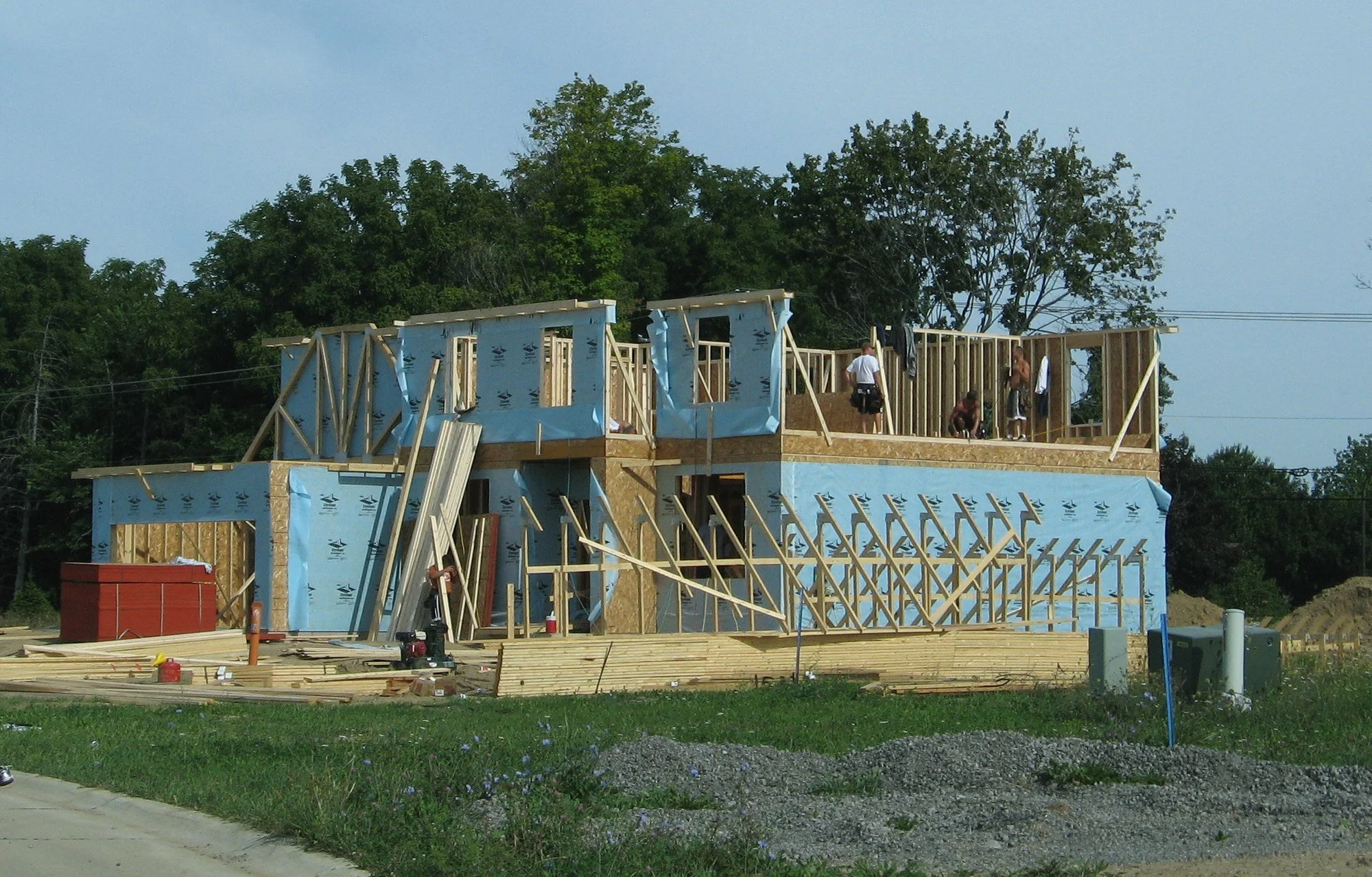
A new house at the framing stage, the point when a pre-drywall inspection can still see everything. Photo: Dwight Burdette, CC BY 3.0, via Wikimedia Commons.
Summerville Townhomes and the HOA Math
Townhomes are the entry point into this market, and the monthly number, not the purchase price, decides affordability. Ask what the dues cover, because the split between what the regime maintains and what the owner maintains varies widely between Summerville communities, and roofs and siding are the expensive line.
Three documents are worth more than any tour. The budget tells you whether reserves are funded or whether the association is one roof replacement from a special assessment. The master insurance policy tells you where its coverage stops and your own policy has to start. The covenants tell you whether rentals are capped, which matters if you might move in a few years and keep the unit. In a brand-new community the builder usually controls the board during the declarant period, so dues are often set low at launch and rise once control transfers to owners. Ask when that transfer is scheduled.
Register Your Agent on the First Visit
Builder sales offices in this market generally require your agent to come with you or be registered in writing on your very first visit. Walk into a model home in Nexton or Cane Bay alone and give your name, and you can lose the right to representation in that community, even if you buy months later. The rule varies by builder, but the pattern is consistent enough that it is not worth testing.
The agent in the sales office is paid by the builder and represents the builder. They are often helpful and knowledgeable, but they do not owe you their analysis of whether the lot premium is justified or whether the incentive is better at a competitor two miles away.
When Resale Is the Better Answer
New construction is not automatically the better buy. If you need to move by a firm date, a to-be-built home is a poor fit, since most contracts give a target completion rather than a guarantee. If you want to negotiate on condition, a resale gives you inspection findings to push back with and a builder gives you almost none.
Resale also wins on certainty. In a community still under construction you are buying a rendering of the street, with years of trucks, mud and unknown future phases next door. An established Summerville neighborhood lets you see the traffic, the trees and the neighbors before you commit. And if you want a large lot or mature landscaping, the new-build inventory here will not give you either.
Frequently Asked Questions
What should I know before buying a new construction home in Summerville?
Confirm which county the lot is in, because Nexton and Cane Bay are in Berkeley County while the historic town and Summers Corner are in Dorchester County, with different millage and different school districts. Then file for the 4 percent legal residence ratio by January 15, book a pre-drywall inspection and read the builder's warranty definitions before you sign.
Do you need a realtor to buy new construction in Summerville?
You do not need one, but you should have one, and you need to register them on your first visit to the sales office. Most builders in this market will refuse representation later if you toured alone and gave your name. The sales agent in the model home is paid by the builder and represents the builder, not you.
How do new construction homes in Summerville compare in price and quality?
New builds cluster close to the overall market median, so the price gap against resale is smaller than most buyers expect. Quality varies more by builder and by individual crew than by price point, which is why a private pre-drywall inspection matters more than the brochure. Code inspections are a minimum standard, not a quality review.
What is the new construction warranty in South Carolina?
There is no state-mandated new home warranty in South Carolina, so the written coverage is whatever the builder's warranty says. The common structure is one year on workmanship, two years on plumbing, electrical and HVAC and ten years on major structural defects. How the builder defines a major structural defect decides how much that ten-year figure is actually worth.
What should I consider when buying a townhome in Summerville, SC?
Start with the regime budget, the master insurance policy and the covenants rather than the unit itself. Confirm what the association maintains versus what you maintain, especially roofs and siding, and check whether reserves are funded. In new communities the builder controls the board at first, so ask when control transfers and whether dues are expected to rise.
Does a new construction home come with a seller disclosure in South Carolina?
No. South Carolina's Residential Property Condition Disclosure Act exempts the first sale of a dwelling never inhabited, so a brand-new home arrives with no seller disclosure statement. That puts the burden on your own inspections and on whatever the builder commits to in writing.
Working With the Gentry Todd Group
Buying new construction in Summerville goes well when the county, the tax filing, the contract terms and the inspection schedule are settled before you walk into a sales office, not after. Gentry Todd has spent more than fifteen years in Charleston area real estate and brings a commercial construction background to reading what a builder is promising.
If you are comparing communities, bring the list. The Gentry Todd Group will register you properly, pull the real tax and school assignment for each parcel and tell you where the incentive is better. Sometimes the answer is the resale three streets over, and we will say so. The Summerville area guide is a good place to start.
Phone: 843-730-4454 (text preferred)
Email: gentrytoddgroup@compass.com
Office: Compass, 58 Indigo Point Drive, Charleston, SC 29407
Hours: Monday through Friday, 9:00 a.m. to 6:00 p.m.; Saturday and Sunday, 9:00 a.m. to 1:00 p.m.
Sources
Charleston Trident Association of REALTORS, Local Market Update September 2026, Dorchester County: Single-family median sale price of $399,997 for January through September 2026 (up 0.9 percent), 2,215 sales, 47 average days on market, 96.4 percent of original list price received and 900 homes for sale in September
Charleston Trident Association of REALTORS, Local Market Update September 2026, Berkeley County: Single-family median sale price of $422,894 for January through September 2026 (up 1.3 percent), 3,595 sales, 48 average days on market, 97.1 percent of original list price received and 1,176 homes for sale in September
South Carolina Department of Revenue, Individual Property Taxes: The 4 percent legal residence and 6 percent assessment ratios and the school operating millage exemption
Berkeley County, Deadline to Apply for 4% Special Assessment Credit: The January 15 filing deadline for new homeowners
SC LLR, Residential Property Condition Disclosure Act exemptions: The first sale of a dwelling never inhabited is exempt from seller disclosure
South Carolina Code of Laws, Section 40-59-840: The written notice of claim required at least 90 days before filing an action against a builder
GreatSchools, Nexton Elementary: Nexton is in the Berkeley County School District despite its Summerville address
NCES, Dorchester School District Two: District size for the Dorchester County side of Summerville
Wikipedia, Cane Bay High School: The Berkeley County high school serving Cane Bay and Nexton, opened in 2008